Southwest Research Institute (SwRI)
Southwest Research Institute (SwRI) will continue its decades-long program to extend the life of aging military aircraft through a new contract worth up to $250 million with the United States Air Force. This Indefinite Delivery Indefinite Quantity (IDIQ) contract award supports the U.S. Air Force Academy Center for Aircraft Structural Life Extension (CAStLE), a program created to address aging aircraft structures and material degradation. IDIQs are contract vehicles that fund work over specified periods of time, in this case up to eight years.
The contract work will evaluate and help sustain the A-10 Thunderbolt II attack aircraft, the T-38 Talon supersonic trainer, the C-5 cargo carrier and the B-52 Stratofortress bomber, among others. All four aircraft were introduced in the 1960s and ‘70s. SwRI will also provide technical engineering support for a series of small fleets managed by Hill Air Force Base, including the T-41 and the T-52, both trainer aircraft, and the E-9 surveillance aircraft.
“While Air Force aircraft are the primary focus, the contract allows the Navy, Army and Coast Guard to utilize the program as well,” says David Wieland, who oversees SwRI’s Aerospace Structures Section. “Under the current contract, the scope of our work has grown to cover more aircraft fleets due to the effectiveness of SwRI’s program, which is focused on providing the right solutions.”
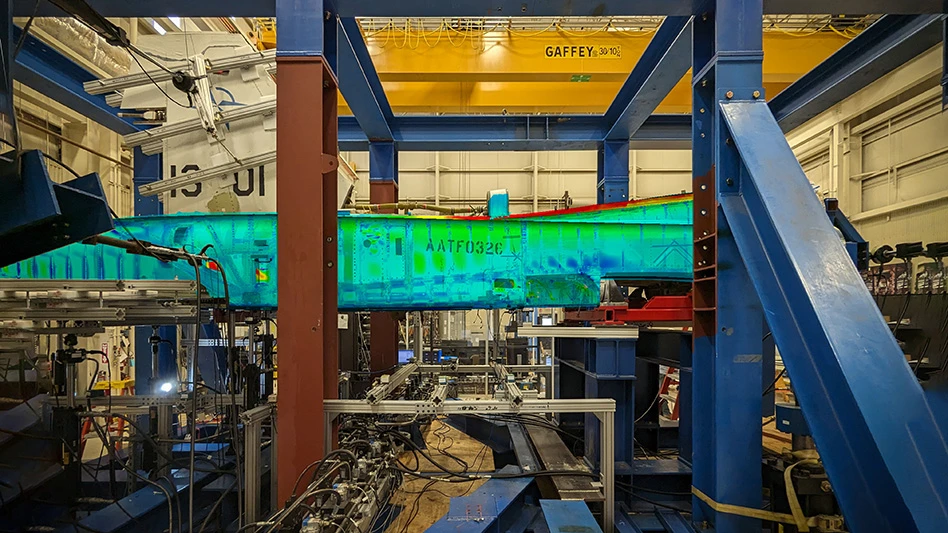
SwRI will assess structural integrity of the aircraft, which includes component testing, full-scale testing, usage monitoring, stress analysis and damage tolerance analysis, characterizing aircraft materials to better understand how cracks originate and grow. Additionally, SwRI will conduct teardown inspections and material failure analysis to assess risk and help ensure the airworthiness of the aircraft.
The contract will also allow SwRI to continue to support the Air Force’s ongoing digital transformation.
“Because records such as maintenance logs and schematics connected to airplanes designed in the 1970s were all on paper, we’ve been helping the Air Force manage how they convert these into digital records,” says Luciano Smith, who manages SwRI’s Structural Integrity team. “This includes designing easily searchable databases and tools for digitized drawings, solid models and maintenance records. It’s a valuable process for our customers to more efficiently store and work with their engineering and maintenance data.”
SwRI has provided technical engineering support to the Air Force for several decades, supporting aircraft subsystems, including propulsion, avionics, electrical, mechanical, electromechanical and hydraulics technology, in addition to solving problems associated with information security and electronics systems.
“This program’s evolution is a testament to its success,” Wieland says. “SwRI has a strong reputation for being client-centered and responsive, ensuring continued growth and reliance on our expertise.”
Latest from Defense and Munitions
- SMW Autoblok Corporation appoints Brandon Mathis as National Sales Manager
- Bodycote expands U.S. aerospace and defense footprint with acquisition of Spectrum Thermal Processing
- AM Solutions’ automated surface finishing of 3D-printed parts
- Joint Interagency Task Force 401 expands counter-drone training
- Davie Defense awarded U.S. Coast Guard contract to build five Arctic Security Cutters
- Dillon Manufacturing’s Jaw Force Gauges
- Georgia Southern University partners with METAL to advance workforce training in metalworking and manufacturing
- AM General sells first HUMVEE Hawkeye 105mm mobile howitzer systems as part of three-year contract