Photo credit: Lockheed Martin
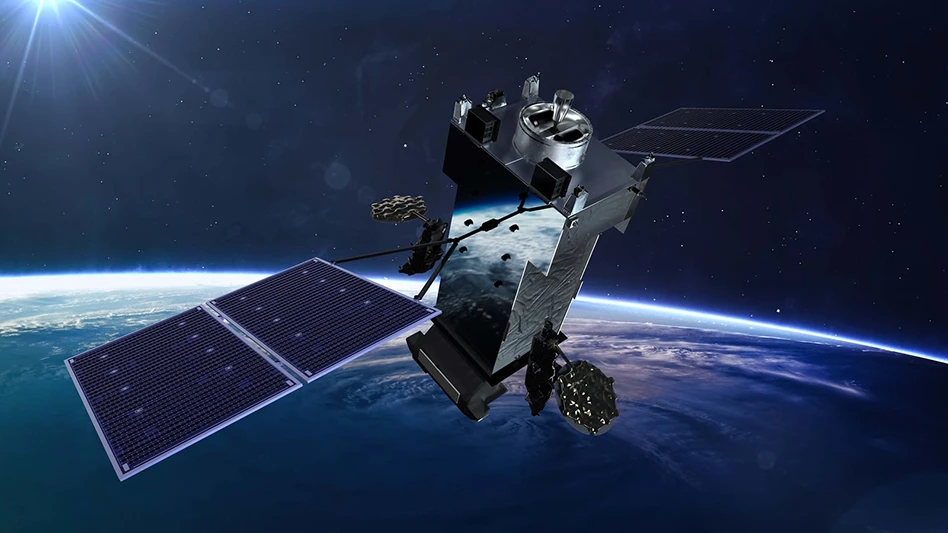
Raytheon, an RTX business, delivered its first sensor payload to prime contractor Lockheed Martin, keeping the U.S. Space Force Space Systems Command's first Next-Generation Overhead Persistent Infrared, or Next-Gen OPIR, Geosynchronous Earth Orbit (GEO) Block 0 missile warning satellite on track for a 2025 initial launch capability.
Designed to improve missile warning resilience and performance, two Next-Gen OPIR GEO satellites will eventually provide continuous coverage over mid-latitudes to the existing constellation. Raytheon is designing and building sensor payloads for both satellites.
Prior to delivery of the first payload, Raytheon completed a series of assessments including thermal vacuum testing. Thermal vacuum testing exposes the payload to a space-like environment and validates digital models to ensure the sensor meets design requirements. The second sensor payload is more than 60% completed and is scheduled to start thermal vacuum testing in early 2025.
"Persistent early warning of missile threats is critical to our national security," says Sandy Brown, vice president for Mission Solutions & Payloads for Raytheon. "Our payloads offer early, resilient warning against increasingly challenging ballistic threats from adversaries."
Latest from Defense and Munitions
- SMW Autoblok Corporation appoints Brandon Mathis as National Sales Manager
- Bodycote expands U.S. aerospace and defense footprint with acquisition of Spectrum Thermal Processing
- AM Solutions’ automated surface finishing of 3D-printed parts
- Joint Interagency Task Force 401 expands counter-drone training
- Davie Defense awarded U.S. Coast Guard contract to build five Arctic Security Cutters
- Dillon Manufacturing’s Jaw Force Gauges
- Georgia Southern University partners with METAL to advance workforce training in metalworking and manufacturing
- AM General sells first HUMVEE Hawkeye 105mm mobile howitzer systems as part of three-year contract