American Center for Manufacturing & Innovation
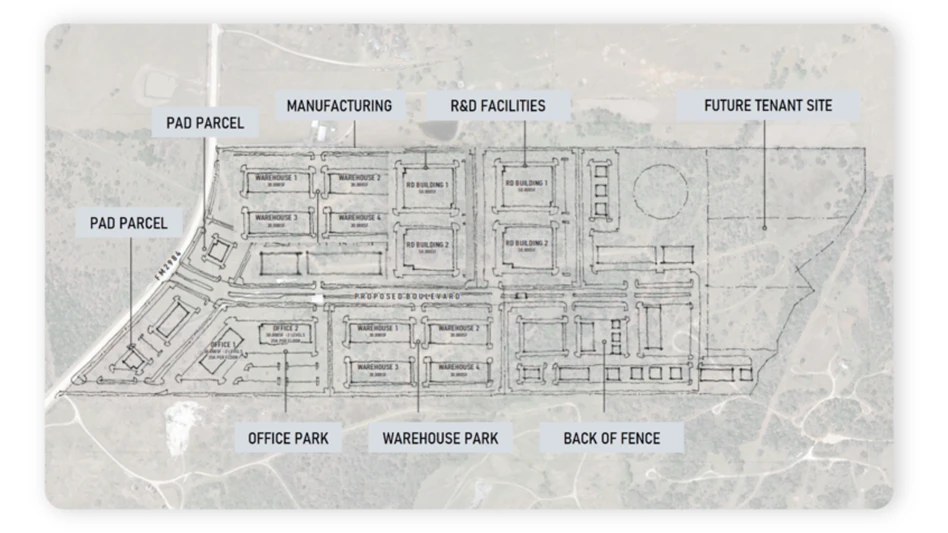
The Department of Defense's Office of the Deputy Assistant Secretary of Defense for Industrial Base Resilience, through its Manufacturing Capability Expansion and Investment Prioritization (MCEIP) office, has launched a munitions campus pilot project to support multiple emerging domestic businesses through a shared facility that will reduce cost and lower barriers to entry.
Through the pilot project, awarded to the American Center for Manufacturing and Innovation (ACMI) under a competitive process, DoD will provide $50 million in shared equipment and $25 million in funding to transition research and development (R&D) into production and to support domestic supply chain resilience. The pilot campus, the location for which will be determined as part of the project, is an important exploratory first step in a plan to open multiple campuses around the country.
The munitions campus pilot applies the concept of innovation clusters—which are typically focused on R&D activities—to test and transition R&D into production, pooling resources to include capital, expertise, facilities, equipment, and talent.
"The benefit of regional clusters is well known in the R&D community," says Mr. Anthony Di Stasio, MCEIP Director, who previously led a joint munitions R&D program. "We are applying this concept to enable companies to more quickly and effectively test, refine, and possibly combine technologies, while accessing shared resources that allow more companies to achieve production."
The campus will also enable companies at different stages in the supply chain to collaborate as they develop their products.
This project is part of a portfolio of initiatives designed to reduce barriers for emerging domestic businesses, leverage and stimulate private capital, and establish regional manufacturing ecosystems. These projects harness the overlap between Defense and commercial markets, aggregating demand to generate economies of scale that empower domestic industry to compete with foreign suppliers.
In addition to using multiple markets to smooth out demand cycles and reduce supply chain risk, the munitions campus will apply advanced manufacturing technology and process innovations to reduce costs for DOD-specific needs. Applying these proven improvements to munitions manufacturing is an essential step in expanding domestic capacity, as the DOD accelerates efforts to increase munitions production and build long-term resilience across the industrial base.
Latest from Defense and Munitions
- Defense and Munitions Online Exclusive with Keeper Security
- Mazak will show shops how to drive production at Dallas open house event
- Sandvik Coromant's CoroTurn Plus turning adapter
- US Navy selects L3Harris Red Wolf for Precision Attack Strike Munition program
- Snowbird Technologies integrates Meltio Engine Blue into containerized hybrid manufacturing system for defense
- Precision Additive's PA-300 LPBF 3D metal printer
- BIG DAISHOWA supports future of manufacturing with Tools for Schools program
- Mission-Ready: Hutchinson Aerospace & Industry achieves CMMC Level 2 certification