Photo by Savannah Baldwin
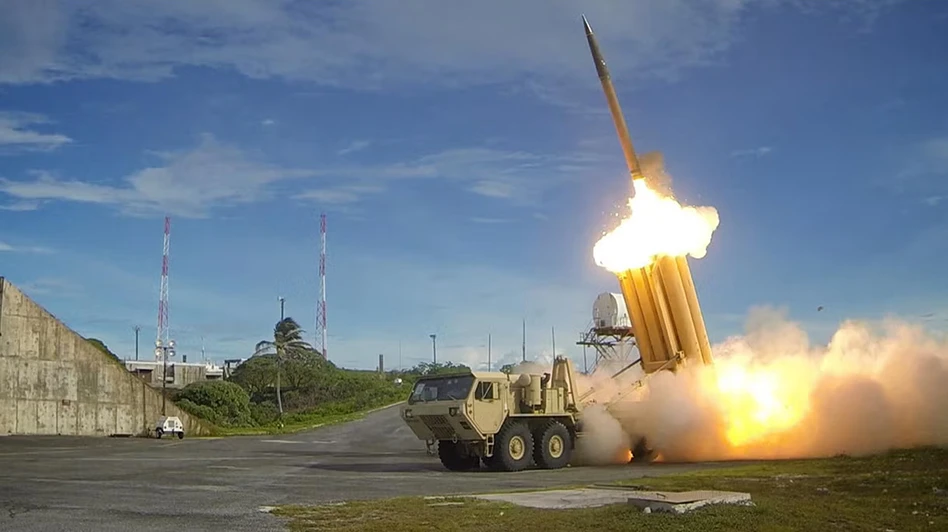
Curtiss-Wright Corporation has been selected by American Rheinmetall to provide its Turret Drive Stabilization System (TDSS) for the prototype phase of the U.S. Army’s XM30 Combat Vehicle (CV) program, which was recently approved to advance to Milestone B, the Engineering and Manufacturing Development (EMD) phase.
“Curtiss-Wright is proud to collaborate with American Rheinmetall in support of the U.S. Army’s next-generation XM30 combat vehicle program,” says Lynn M. Bamford, Chair and Chief Executive Officer of Curtiss-Wright Corporation. “Our enhanced, modular stabilization solution ensures accurate targeting and consistent performance over the most challenging terrain. Enabling rapid integration of evolving technologies, our approach reduces program risk while delivering critical capability to the warfighter. In addition to our previous successful support of international ground defense modernization efforts, this new contract extends Curtiss-Wright’s proven performance to a major U.S. ground combat vehicle program.”
Curtiss-Wright’s TDSS will deliver stabilized turret system control for the XM30, enabling accurate engagement of moving targets while the vehicle maneuvers across rugged terrain. This enhanced targeting capability supports improved survivability and mission effectiveness for crews operating in highly dynamic combat environments. During the EMD phase, American Rheinmetall will produce eight prototype vehicles for government testing ahead of a planned program down-select in 2027.
Curtiss-Wright’s state-of-the-art, modular TDSS is a field-proven solution with units deployed worldwide. Its modular, off-the-shelf architecture supports rapid customization and system integration, reducing performance risk and enabling accelerated development timelines.
Curtiss-Wright is performing the work within its Defense Electronics segment.
Latest from Defense and Munitions
- Kratos, GE Aerospace win U.S. Air Force award to design engine for expendable Combat Collaborative Aircraft
- ZeroEyes Government Solutions (ZEGS) to develop generative AI solutions for base security
- Embraer, Northrop Grumman developing advanced air mobility capabilities for U.S., Allied Nations
- Mitutoyo America's CRYSTA-Apex V PLUS Series
- Ursa Major appoints Chris Spagnoletti as chief executive officer
- What’s ahead for the aerospace industry this year
- DMG MORI × The University of Tokyo establish the “Machining Transformation Research Center”
- Swarm Aero announces Advanced Manufacturing Center, celebrates ribbon cutting in Northwest Arkansas