America Makes
America Makes and the National Center for Defense Manufacturing and Machining (NCDMM) are proud to announce a new open project call funded by the Office of the Under Secretary of Defense, Manufacturing Technology Office (OSD ManTech) worth a total of $1.3M. The project call, Corrosion of Additive – Tested At Component Scale (CATACS), focuses on two main topic areas and will demonstrate and validate a framework for evaluating corrosion testing needs and generate data applicable to metal AM with similar corrosion performance requirements. Two awards are anticipated.
Additive manufacturing (AM) is of significant interest to the Department of Defense as it enables rapid, customizable production. However, AM qualification and certification for metal parts remain a barrier due to a lack of widely accepted testing and processing methods. Material properties produced from AM can differ from traditional manufacturing methods, leading to unique corrosion concerns. The CATACS program aims to establish and validate a framework for evaluating AM metal part corrosion testing needs, focusing on representative testing at the component scale in two critical areas: high-temperature environments and thermal management systems.
By addressing these gaps, the CATACS program looks to accelerate the adoption of AM parts in high-performance defense systems by establishing a reliable corrosion testing framework that streamlines certification, strengthening manufacturing readiness, and scaling the defense industrial base.
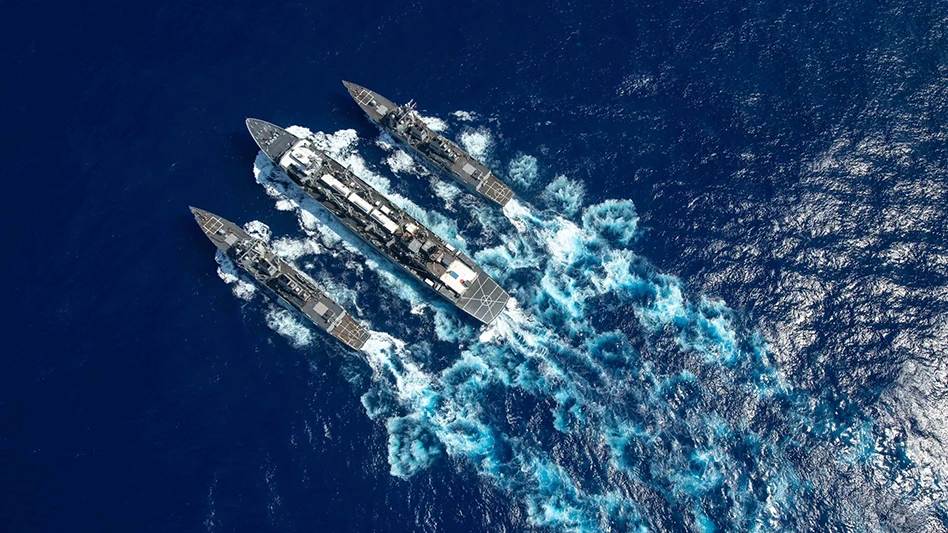
“CATACS is about putting real AM hardware to the test in harsh conditions — because corrosion will find the weak points,” says Ben DiMarco, Technology Transition Director at America Makes. “We’re asking proposers to bring their best parts, set a plan to stress them in extreme environments, and let the sea attack. That is CATACS.”
America Makes strives to accelerate the development and deployment of innovative, cost-effective, energy-efficient AM and 3D printed technologies to meet defense and/or commercial needs. Projects should feature validated prototypes tested in relevant settings (TRL 4–7), not early-stage concepts. They should also show manufacturability through pilot builds and controlled processes (MRL 4–7), with a clear path to repeatable production at the onset of the proposed project.
The CATACS request for proposal (RFP) is separated into two topic areas.
- Topic 1 – Corrosion of AM Components at Elevated Temperatures: Demonstrate corrosion performance of AM components requiring elevated temperature capability in representative environments beyond lab air, considering pressure-vessel conditions, fuel-air mixtures, differing surface exposures, and metallurgical interactions with adjacent components.
- Topic 2 – Corrosion of AM Components for Thermal Management: Demonstrate corrosion performance of metal AM thermal management components, focusing on interactions between AM microstructures and one or more working fluids under varying thermal conditions across complex geometries and flow channels.
Project call timeline:
- Launch: October 7, 2025
- Kickoff Webinar: October 16, 2025 (Registration Required HERE)
- Questions Due from Proposers about Scope or Approach: October 23, 2025
- Membership Eligibility Deadline: November 20, 2025
- Submission Deadline by 5 p.m. ET: December 2, 2025
- Anticipated Awards Announcement: January 6, 2026
Proposers for the project call are advised to reference the RFP for full details and guidelines.
Latest from Defense and Munitions
- SMW Autoblok Corporation appoints Brandon Mathis as National Sales Manager
- Bodycote expands U.S. aerospace and defense footprint with acquisition of Spectrum Thermal Processing
- AM Solutions’ automated surface finishing of 3D-printed parts
- Joint Interagency Task Force 401 expands counter-drone training
- Davie Defense awarded U.S. Coast Guard contract to build five Arctic Security Cutters
- Dillon Manufacturing’s Jaw Force Gauges
- Georgia Southern University partners with METAL to advance workforce training in metalworking and manufacturing
- AM General sells first HUMVEE Hawkeye 105mm mobile howitzer systems as part of three-year contract