U.S. Department of Defense
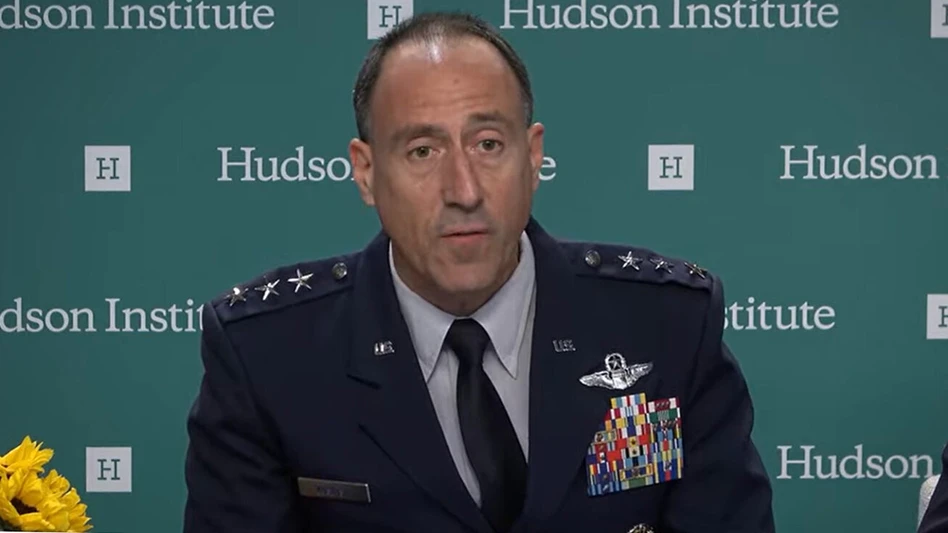
In the last two years of fighting in Ukraine, Russians have not hesitated to initiate frontal assaults with no concern about sacrificing their own people, said Air Force Lt. Gen. Leonard J. Kosinski, Joint Staff logistics director.
Despite Ukraine's ability to skillfully incorporate high-end technology into the fight, it's imperative that they receive more munitions, he said on a panel at the Hudson Institute in Washington, D.C.
"Sometimes you just need bullets to be able to fight against bullets and onslaughts of folks," Kosinski said.
Over the last few decades, the U.S. has not adequately prepared itself for near-peer competition with mass production of munitions and other warfighting materiel, he said, adding the U.S. is now making better decisions to increase that capability.
The U.S. is also relying on the defense industrial bases of partners nations for sustainment to Ukraine, Kosinski said.
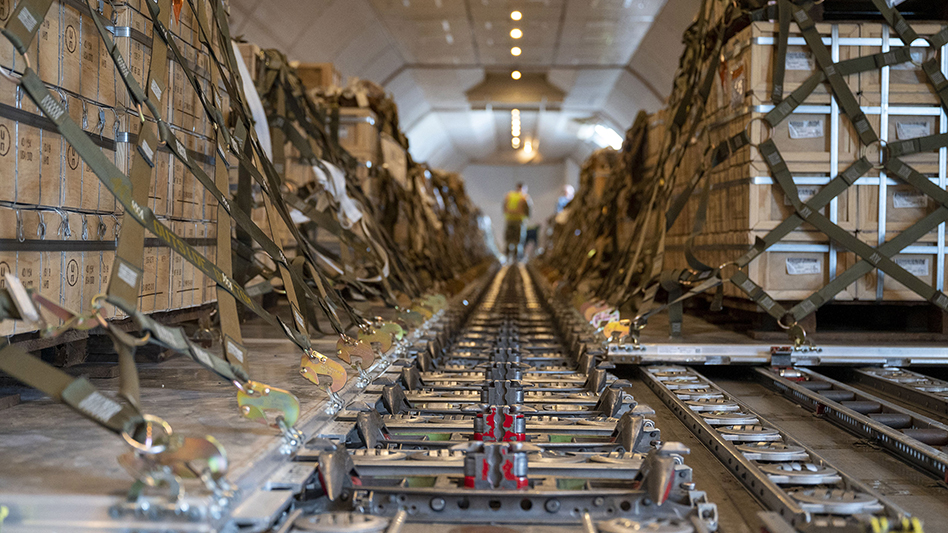 Cargo sits on an aircraft after being loaded by airmen assigned to the 436th Aerial Port Squadron in support of a security assistance mission between the U.S. and Ukraine at Dover Air Force Base, Del., May 24, 2021. Photo by Air Force Airman 1st Class Cydney Lee
The Defense Department is preparing itself for the near-peer fight by investing in readiness and modernization in some creative ways — such as the replicator initiative, which will get weapons produced at speed and scale, he said.
Jan Jires, an official with the Czech Republic defense ministry, said that Europe's contribution to Ukraine's war effort has been far better than anyone expected.
For instance, a single German company is now producing more 155mm artillery shells than the entire U.S. defense industry combined, he said.
"The combined value of European support to Ukraine, [in terms of] financial, humanitarian and military [assistance], has been larger than what came from the United States. And that's a good thing," Jires said.
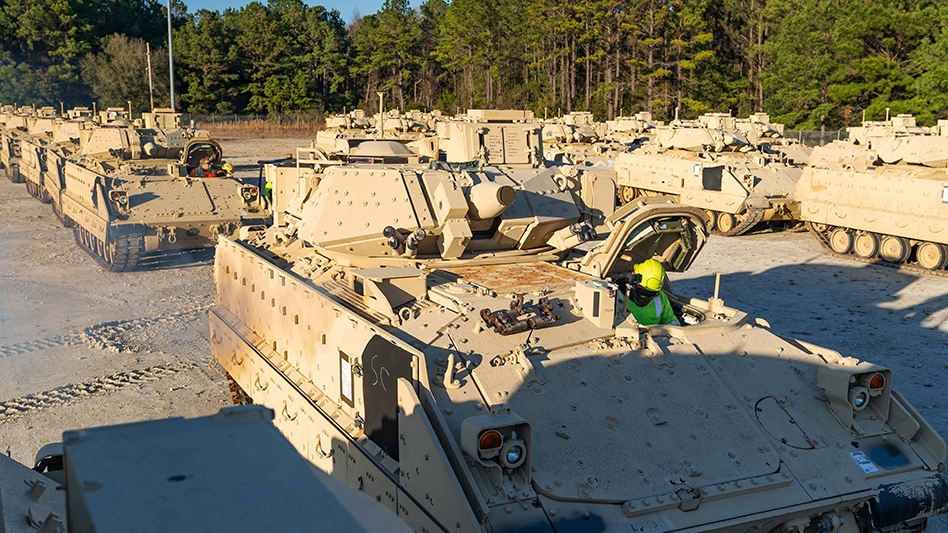 A stevedore sits in a Bradley fighting vehicle before loading it onto the ARC Wallenius Wilhemsen vehicle carrier at the Transportation Core Dock in North Charleston, S.C., Jan. 25, 2023. The shipment of Bradleys was part of the U.S. military aid package to Ukraine. Photo by Oz Suguitan, U.S. Transportation Command
That said, Europe should be doing even more, he added. "It's in our vital interests."
Rebeccah Heinrichs, a senior fellow at the Hudson Institute, said, "Ukraine needs weapons immediately."
Getting supplemental [security assistance] passed benefits not just Ukraine, Taiwan, and Israel, it also benefits the U.S. industrial base, she noted.
The American people need to be reminded why European security is directly related to U.S. security, she said.
"Russia remains not just an acute threat to the American people and to the United States of America, [but] it's a chronic threat," she said.
Latest from Defense and Munitions
- What’s ahead for the aerospace industry this year
- DMG MORI × The University of Tokyo establish the “Machining Transformation Research Center”
- Swarm Aero announces Advanced Manufacturing Center, celebrates ribbon cutting in Northwest Arkansas
- Accelerate your shop floor with smart automation strategies
- Resilient by design: CERATIZIT secures tungsten supply for the future
- The Lee Company opens new Innovation Center in Connecticut
- Walter's new Walter Lock (WL) geometries for W1011 and W1211 copy turning systems
- Leonardo DRS opens advanced naval power and propulsion facility in Charleston, South Carolina