AeroVironment, Inc. (AV)
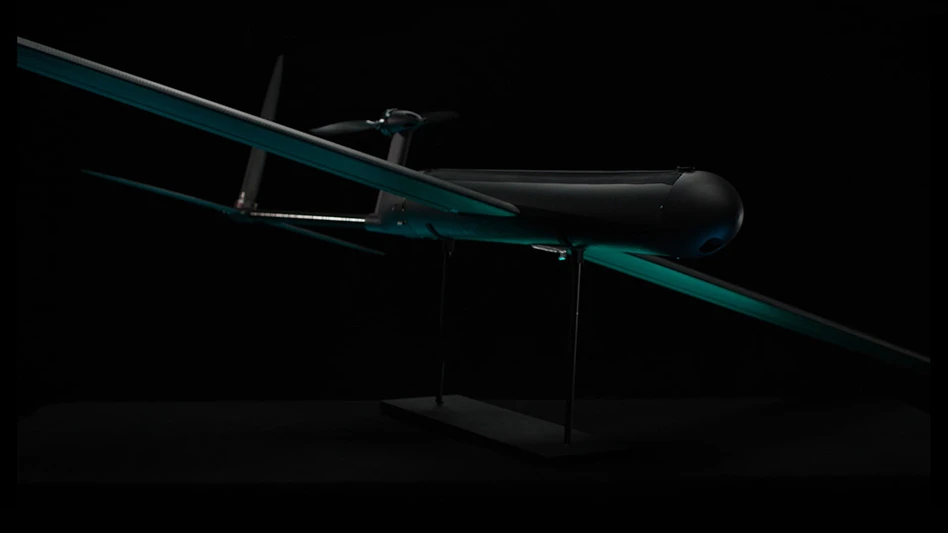
AeroVironment, Inc. launched Red Dragon, a fully autonomous capable, software-defined unmanned aircraft system (UAS) designed for one-way attack missions in high-threat, GPS-denied, and communications-degraded environments. Developed as part of AV’s expanding portfolio of tactical autonomy, Red Dragon is built on AV’s AVACORE shared software architecture—enabling rapid development, scalable manufacturing, and modular mission integration. AV’s industry-leading SPOTR-Edge perception system enables detection and classification of targets to aid the operator in making decisions with confidence via AV’s proprietary DDIL radio system.
Red Dragon delivers a combination of autonomy, electronic warfare resilience, and tactical flexibility previously unavailable in its class. It is designed to penetrate contested airspace and operate effectively in denied, disrupted, intermittent, and low-bandwidth (DDIL) environments. The system is capable of autonomous execution of mission objectives without reliance on continuous operator input or satellite navigation.
Designed for manufacturing at scale, Red Dragon enables mass production, rapid deployment, and simplified logistics to meet operational demands. It’s optimized for cross-domain use—across air, land, and maritime—and is designed so small teams can be trained quickly and effectively.
“Red Dragon represents a significant step forward in autonomous lethality,” said Jeff Rodrian, Executive Vice President, MacCready Works. “By combining advanced autonomy, GNSS-independent navigation, and mass producibility, Red Dragon delivers a mission-ready system designed for today’s contested battlespace. It is the first of a new generation of autonomous systems built for scale, speed, and operational relevance.”
“At AV, our mission is to change the way wars are fought—by putting the safety, survivability, and operational advantage of our warfighters first,” says Wahid Nawabi, President & CEO of AV. “Red Dragon reflects the kind of breakthrough capability that ensures U.S. and allied forces stay ahead in an increasingly complex threat environment. It’s not just about autonomy—it’s about delivering trusted, mission-defining technologies that protect lives and reshape the future of defense.”
Red Dragon is the first in a rapidly growing family of platforms under development at AV with a common software and hardware architecture for mission-specific variants. Each shares a common software and autonomy architecture designed to support rapid evolution across domains and use cases. This enables evolutions at the speed of software and warfare.
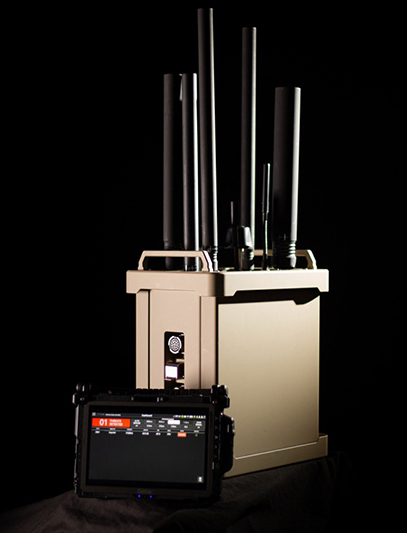
To meet the emerging air threats of today and the rapidly evolving threats of tomorrow, AeroVironment, Inc. also announced Titan 4, the next generation of its battle-proven, warfighter-trusted Counter-Unmanned Aerial Systems (C-UAS) technology. Titan 4 is a smaller, lighter, more powerful, highly extensible Radio Frequency (RF)-based solution to detect and defeat Group 1 and 2 drone threats.
Titan 4 is portable and mission-adaptable—supporting mobile, dismounted, or fixed-site use—and can deploy in under five minutes to identify and neutralize threats, creating a protective dome around personnel and infrastructure. Titan 4 is 17% lighter and 73% smaller than its dual-chassis predecessor, now integrated into a single compact chassis as compared to its dual-chassis predecessor. It offers nearly 250% more transmit power with 540W of total output over six RF bands to address both current and emerging threats. For enhanced airspace awareness, AV has integrated its Titan-SV system within Titan 4 to provide operators with AI/ML-backed passive, long-range precision threat detection.
“With more than a thousand units in the field and hundreds of thousands of operational hours, our team has taken lessons learned from active deployments in rapidly evolving threat landscapes to develop the next era of RF C-UAS superiority,” says Trace Stevenson, President of AV’s Autonomous Systems Segment. "Smaller, lighter and more powerful, Titan 4 is poised to better respond to both individual threats and drone swarms in the harshest environments–using adaptive, autonomous, escalating countermeasures to protect our warfighters, allies, and infrastructure and ensure successful military operations.”
Titan 4 is the flagship solution in AV’s Titan C-UAS suite of autonomous RF counter-drone systems. In addition to Titan 4 and Titan-SV, AV is expanding this suite of solutions with technologies spanning from larger, fixed-site configurations to small, interoperable plug-and-play sensors:
Titan-MS is an AI-powered, multi-sensor technology that detects, identifies, tracks, defeats, and reports on unmanned system threats. As the largest, most powerful solution in the Titan family, Titan-MS (Multi-Sensor) is a multi-mission, multi-threat capability suitable for fixed-site installations in air, sea, and land domains. Fusing RF, radar, and optics with AI and ML algorithms from industry-leading sensors, Titan-MS detects, classifies, and defeats RF-controlled and autonomous drone threats —while also tracking human and vehicle movement. It provides operators with recorded video and detailed analytics for after-action review to continuously improve security operations.
Titan-EO/IR is a portable, multi-sensor platform to detect, identify, track, and defeat UAS threats. Leveraging the repeatable performance of Titan’s RF capabilities along with agile Middle Wavelength Infrared (MWIR) sensors, Titan-EO/IR integrates advanced sensor arrays into a unified interface, delivering full-spectrum airspace awareness.
Titan-SV LOB is a fixed-site or vehicle-mounted small-UAS (sUAS) detection and tracking solution that provides operators with the same long-range, 360° coverage of Titan-SV along with precise azimuth and elevation for all sUAS threats. For standard protocol sUAS, Titan-SV LOB (Line of Bearing) provides enhanced threat awareness with full 3D tracking. With proven commercial and government multi-sensor interoperability, plug-and-play compatibility with BlueSky 2" Mast systems, and a secure API supporting a wide array of integrations, Titan SV-LOB is a versatile, multi-domain C-UAS solution.
Titan-SV MOSA/SOSA is the next generation of Titan-SV in development, putting the passive threat detection power of Titan-SV on an open-architecture sensor card for maximum interoperability on a wide variety of multi-mission systems and open standard chassis. Using Sensor Open Systems Architecture (SOSA) and Modular Open Systems Approach (MOSA) frameworks, Titan-SV SOSA/MOSA promotes interoperability, scalability, and rapid modernization across defense platforms.
“From our fixed-site capabilities to our plug-in integrations, the Titan family of RF C-UAS solutions is a force multiplier for our warfighters,” says Jimmy Jenkins, Executive Vice President of AV’s Precision Strike and Defense Systems Group. “With a proven track record across Titan and Titan-SV deployments, we’re proud to roll out Titan 4 and a full family of Titan solutions to meet the critical multi-mission needs of our customers. We’re moving these innovations from prototype to full-scale production to quickly deliver our U.S.-made and manufactured units into the hands of warfighters who are protecting us at home and abroad.”
Titan was selected as a C-UAS Program of Record (POR) capability for an undisclosed Department of Defense customer in 2022. Since that time, the U.S. Army, Navy, Air Force, Marines, and Special Operations Forces have deployed more than 1,000 units globally to protect U.S., allied, and coalition forces and critical infrastructure. Domestically, Federal departments have deployed Titan systems for crowd protection at large gatherings and major sporting events. Internationally, countries across the North Atlantic Treaty Organization (NATO), Latin America, and other allied partners are trusting Titan to enhance their air defense capabilities against drone threats.
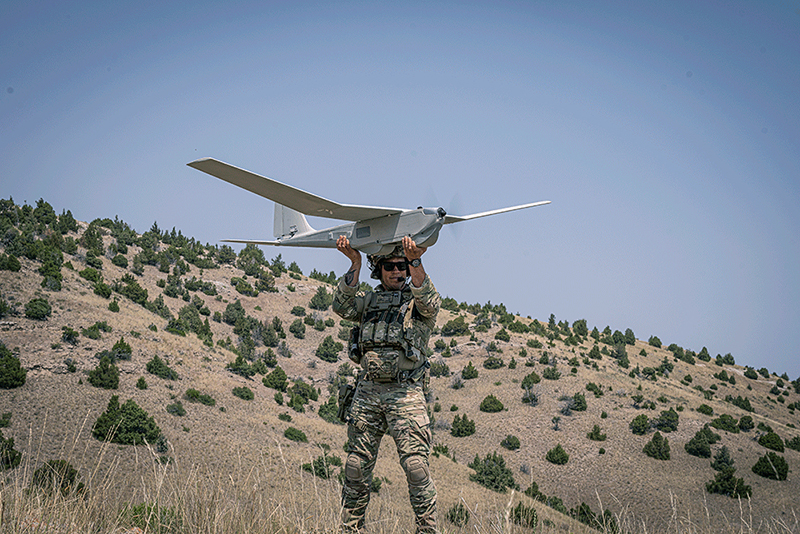
Lastly AeroVironment, Inc. announced a new contract with the Dutch Ministry of Defence (MOD) to modernize the Netherlands’ Puma UAS fleet with expanded capabilities for enhanced situational awareness and operational effectiveness.
Under the contract, the Dutch MOD is modernizing its Puma 3 AE UAS fleet with advanced capabilities that empower forces to carry out mission-critical operations autonomously and securely—even in GPS-denied and contested environments. Upgrades will boost survivability, strengthen communications and add the option for vertical take-off and landing (VTOL) to maximize operational agility. Deliveries are underway, with the upgraded systems set for rapid deployment at the squad and platoon levels.
Additionally, the Netherlands is expanding its UAS portfolio with the acquisition of Puma LE, which delivers extended endurance and range. Both Puma 3 AE and Puma LE provide scalable ISR capabilities for tactical formations and civilian missions.
Battle-proven in the toughest combat zones—including ongoing deployment in Ukraine—Puma systems have earned their reputation in real-world, high-threat environments. Continuous updates driven by frontline experience keep both platforms mission-ready, rapidly adaptable, and equipped with the latest tech to outpace evolving threats.
“Our expanded partnership with the Dutch MOD underscores the rising demand for adaptable, mission-ready uncrewed systems across NATO,” says Stevenson. “AV’s battle-proven Puma platforms are built to deliver real-time intelligence and unmatched battlefield agility—so our partners can make faster, smarter decisions in the world’s most contested environments.”
Designed for fast-paced, expeditionary operations, Puma UAS can be launched by a single soldier or from Fennek reconnaissance vehicles—enabling agile ISR at the edge. These upgrades are part of a broader Dutch initiative to modernize and scale uncrewed capability across their operations.
Latest from Defense and Munitions
- SMW Autoblok Corporation appoints Brandon Mathis as National Sales Manager
- Bodycote expands U.S. aerospace and defense footprint with acquisition of Spectrum Thermal Processing
- AM Solutions’ automated surface finishing of 3D-printed parts
- Joint Interagency Task Force 401 expands counter-drone training
- Davie Defense awarded U.S. Coast Guard contract to build five Arctic Security Cutters
- Dillon Manufacturing’s Jaw Force Gauges
- Georgia Southern University partners with METAL to advance workforce training in metalworking and manufacturing
- AM General sells first HUMVEE Hawkeye 105mm mobile howitzer systems as part of three-year contract