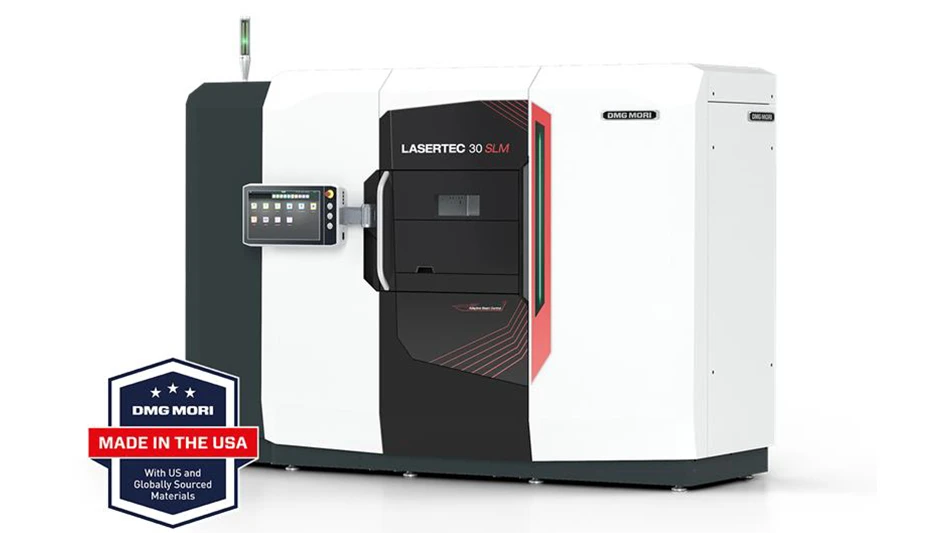
This fall I was lucky enough to attend the 2025 Manufacturing x Digital (MxD) Annual Summit in Chicago, Illinois. MxD is a partner of the Department of Defense (DOD) advancing economic prosperity and national security by strengthening U.S. manufacturing competitiveness through technology innovation, workforce development, and cybersecurity preparedness. Their 22,000ft2 facility features demonstration areas for some of MxD’s members including Siemens, EY, and DMG MORI, which launched their DMG MORI Federal Services division to act as a direct sales channel meeting the highest security requirements for the national defense and repair industry.
The event also featured Acting Deputy Assistant Secretary of Defense (DASD) for Industrial Base Resilience Jeffrey Frankston, who believes the biggest challenges facing the U.S. Defense Industrial Base are Chinese control of critical minerals supply and refinery capacity, inadequate domestic production, unpredictable demand signals, over customization, lack of adequate data, and obsolescence.
A roundtable discussion featuring leaders from EY, Rolls-Royce, BTX Precision, and Southland Development Authority talked about the relationship between OEMs, suppliers, APEX Accelerators, and the government, but one of the most lasting impressions made on me came from Dr. Eng. Masahiko Mori, president and CEO of DMG MORI.

Dr. Mori said there are approximately 5 million machining centers on shopfloors globally while approximately 55% of their customers currently have 100 employees or less. Since smaller shops need to be more efficient with their machines, Dr. Mori believes the industry should focus on reducing the number of machines on shopfloors to 1 million by 2050 by replacing current machines with flexible 5-axis machines with cutting-edge technologies while focusing on operators, energy saving, and networking capital.
DMG MORI is also introducing AMMF – Advanced Manufacturing Mobile Factory with mobile machines that can be set up quickly and in remote locations. An example of their Mobile Factory was even set up in their demonstration area on the MxD floor.
“There’s a demand for the remote area. Machine tools are still very big compared to the size of the real work piece,” Dr. Mori said. “In Japan, we do a tea ceremony in a very, very small room so that gave us more ideas to compact and make the machine more efficient.”
English playwright Arthur Wing Pinero once said, “Where there’s tea, there’s hope,” and with solutions like DMG MORI’s Mobile Factory, there’s hope for manufacturing in the future.

Explore the November/December 2025 Issue
Check out more from this issue and find your next story to read.
Latest from Defense and Munitions
- US Navy selects L3Harris Red Wolf for Precision Attack Strike Munition program
- Snowbird Technologies integrates Meltio Engine Blue into containerized hybrid manufacturing system for defense
- Precision Additive's PA-300 LPBF 3D metal printer
- BIG DAISHOWA supports future of manufacturing with Tools for Schools program
- Mission-Ready: Hutchinson Aerospace & Industry achieves CMMC Level 2 certification
- Shotling's anti-drone shotgun
- ACMI breaks ground on first national manufacturing campus in Indiana, pioneering new model for American defense production
- December 2025 U.S. cutting tool shipments totaled $215M